

Get Long-lasting Tone from the Strings You Love!
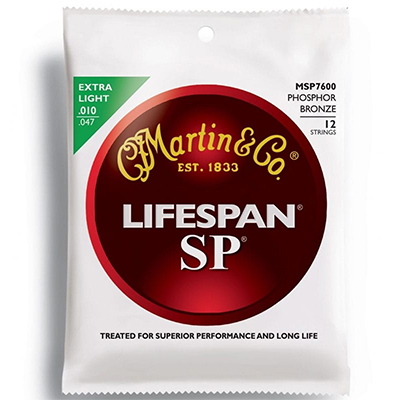
At C. F. Martin & Co., they design their strings like they design their guitars – with maximum performance, exacting tone, and playability in mind. They know that musicians demand strings that will perform on stage or in the studio or wherever your music takes you. Martin SP Lifespan strings take Martin’s legendary quality even further, by giving your guitar exceptional tone, clarity, and response that lasts. Treated with Martin’s Cleartone proprietary formula, SP Lifespan strings repel dirt and oil and play like new, long after conventional strings wear out.
Martin SP Lifespan Coated 92/8 Phosphor Bronze 12-string Acoustic Guitar Strings Features at a Glance:
- Treated with Martin’s Cleartone proprietary technology for a longer lifespan than regular strings
- Extra Light gauge
- .010, .010, .014, .014, .010, .023, .012, .030, .018, .039, .027, .047
- 92/8 phosphor bronze provides a classically expressive tone
Martin SP Lifespan Coated 92/8 Phosphor Bronze 12-string acoustic guitar strings provide excellent tone that lasts!
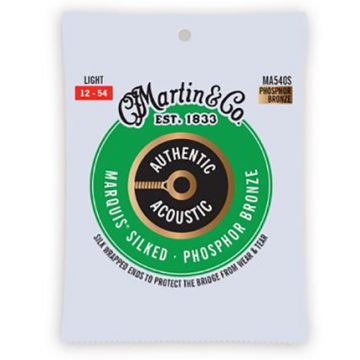
Martin ® Authentic Acoustic ® Marquis ® Silked strings feature a soft silk wrap that prevents wear and tear on the bridge holes and bridge plate as you play. The added thickness also ensures that bridge pins will stay locked in place, even in older bridges with worn holes. Our impeccable standards for acoustic guitar tone are embedded in our string design and precision manufacturing process. That’s why we make our own.
| Gauge | E | B | G | D | A | E | Tension | Model |
|---|---|---|---|---|---|---|---|---|
| 80/20 Bronze | ||||||||
| Extra Light | .010 | .014 | .023 | .030 | .039 | .047 | 135.8 | MA170S |
| Custom Light | .011 | .015 | .023 | .032 | .042 | .052 | 153.7 | MA175S |
| Light | .012 | .016 | .025 | .032 | .042 | .054 | 167.3 | MA140S |
| Medium | .013 | .017 | .026 | .035 | .045 | .056 | 189.6 | MA150S |
| Extra Light 12-String | .010/.010 | .014/.014 | .023/.010 | .030/.012 | .039/.018 | .047/.027 | 261.7 | MA180S |
| 92/8 Phosphor Bronze | ||||||||
| Extra Light | .010 | .014 | .023 | .030 | .039 | .047 | 137.0 | MA530S |
| Custom Light | .011 | .015 | .023 | .032 | .042 | .052 | 155.1 | MA535S |
| Light | .012 | .016 | .025 | .032 | .042 | .054 | 168.5 | MA540S |
| Medium | .013 | .017 | .026 | .035 | .045 | .056 | 190.9 | MA550S |
| Extra Light 12-String | .010/.010 | .014/.014 | .023/.010 | .030/.012 | .039/.018 | .047/.027 | 263.3 | MA500S |
| Silk & Steel Folk | ||||||||
| Custom | .0115 | .014 | .023 | .028 | .038 | .047 | 122.2 | MA130S |
How to choose a string gauge for your acoustic guitar
String gauge is an important part of playing and getting the best possible sound out of your guitar.
Here’s everything you need to know about acoustic guitar string gauges to make an informed decision about what strings are best for you.
String Gauge:
Gauge refers to the diameter of a string. Gauges are described in thousandths of an inch and can be found listed on the back of a string pack.
Overall, string gauges are classified as:
Extra light
Custom light
Light
Medium
Heavy
For purposes of this tutorial we’ll refer to anything from extra light to light as "œlighter," and anything from medium to heavy as "œheavier." While we want this article to be a comprehensive overview of string gauges for acoustic guitars, it is important to note that Martin does not recommend heavy gauge strings for any Martin guitars. We recommend using only extra light through medium gauge strings on our guitars. Heavy strings can cause too much tension on the top which may cause irreversible damage.
Your Experience:
If you’re just starting out, it’s not unusual that your fingers will have to toughen up a little. Lighter gauge strings will be more forgiving on your fingers as you’re learning, but as your dexterity and hand strength improve, you may find you prefer strings with different qualities.
Lighter
Easier to fret (important for beginners) and to bend
Better resonance under a lighter touch, common when first starting out
Heavier
Bigger sound – provide more volume and resonance
Better tuning stability – stays in tune longer
Body Size of Guitar:
While string gauge is very much a matter of personal preference based on tone and feel, most manufacturers recommend string gauge based on body size. This is primarily due to the amount of tension exerted on the guitar top by the strings. In general, the larger the body, the more tension they can withstand.
Lighter
Exert less tension and are typically recommended for smaller bodied guitars such as 0, 00, 000, and OM, plus all cutaway models
Heavier
Exert more tension and are typically recommended for larger body sizes such as D, Jumbo, and Grand Jumbo
Style of Music:
Certain techniques and styles of playing will demand different attributes from your strings and can impact which gauge you should choose.
Lighter
Good choice for rock, folk, country, and blues style playing with a lighter attack (plucking)
Allow for easier bending of notes
May break more easily with more aggressive playing styles
Heavier
Good choice for bluegrass and genres that require tuning down
Good choice for rock, country, and blues style playing with a harder attack
What Sound:
Are you playing for yourself in your living room? Or do you need your sound to reach the back of an auditorium? You’ll want to be sure to choose the right string gauge that will help you and your guitar sound the best.
Lighter
Offer appropriate volume and range for playing in an intimate setting
Heavier
Produces more volume and sustain
Great choice if you’re accompanied by other players
Experimenting with String Gauge:
If you found yourself aligned with most of the qualities of "œlighter" strings outlined here, choosing a string labeled "œLight" is a good starting point. If you’re finding finger-fatigue is an issue, or you wish it was easier to bend notes, try extra light or custom light gauge strings.
If most of the qualities prescribed to heavier strings appealed to you, start with strings that are labeled "œMedium." While Martin does not recommend using heavy gauge strings on Martin guitars, we want to paint a complete picture of string gauge options. Some guitarists use heavy gauge strings for amplification, sustain, drop/down tuning, or tuning stability reasons.
One thing to keep in mind when trying out a new string gauge is to make sure your guitar is set up correctly for the gauge you’re playing. Things like fret buzz can be a symptom of needing to visit a luthier to have your guitar adjusted.

Reviews
There are no reviews yet.